Welcome To Our Virtual Museum
Arthropod Fossils in the Paleozoic Era
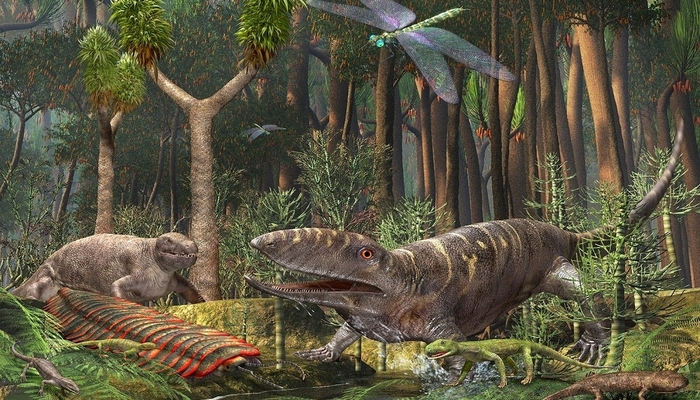
Carboniferous
Period: 360 to 286 mya
The Carboniferous period is divided into the Mississippian Period and the Pennsylvanian period. This is also known as "The Age of Rocks, Coal and Plants". Most reptiles began to appear during this period. This is the period where the continents below the equator start to form the supercontinent Gondwana (Taylor et al., 1990)
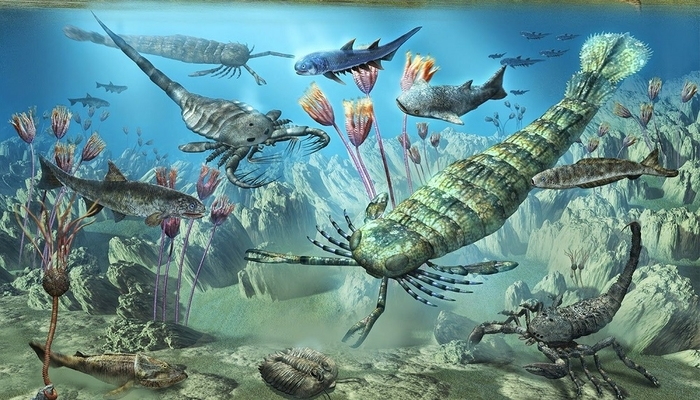
Silurian
Period: 440 to 410 mya
Within this period there was a rise in sea levels and glaciers began to melt. The most common vertebrate in this period were jawless fish. However, this was also a time where fishes evolved to form jaws. Evidence of life on land became apparent and it began with the arthropod group (Ewing et al.,2017)
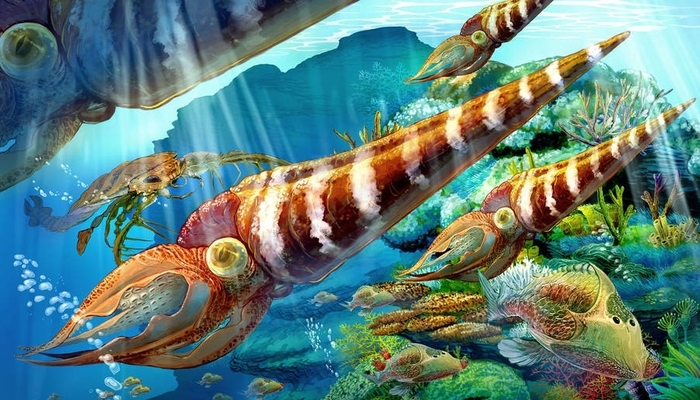
Ordovician
Period: 505 to 440 mya
During the Ordovician period, the invasion of arthropods on land was not established yet. Trilobites were known to be the rulers of the sea, they were an abundant and very diverse group. There was a diversification event which altered the marine life. An alteration took place among the trilobites, allowing for unique, location-dependent features to appear on creatures (Davis et al., 2009).
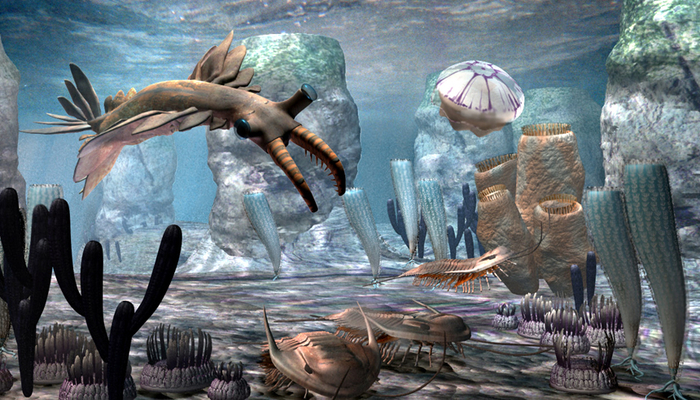
Cambrian
Period: 544 to 505 mya
The name Cambrian is the derivation of Cambria, which is also known as the Roman name for Wales. This is based on the rocks that had been studied in the area for several years. During this period, there was a large number of Hard-shelled species in the shallow seas. Gondwana also formed near the South Pole (Foster et al., 2014)
Group Members
- Leeta Khotsamit
- Emily Arnold
- Kevin Tran
- Andrew Morton